

Why Swing Sets Matter: A Practical Guide to Child Development for Schools and Educators
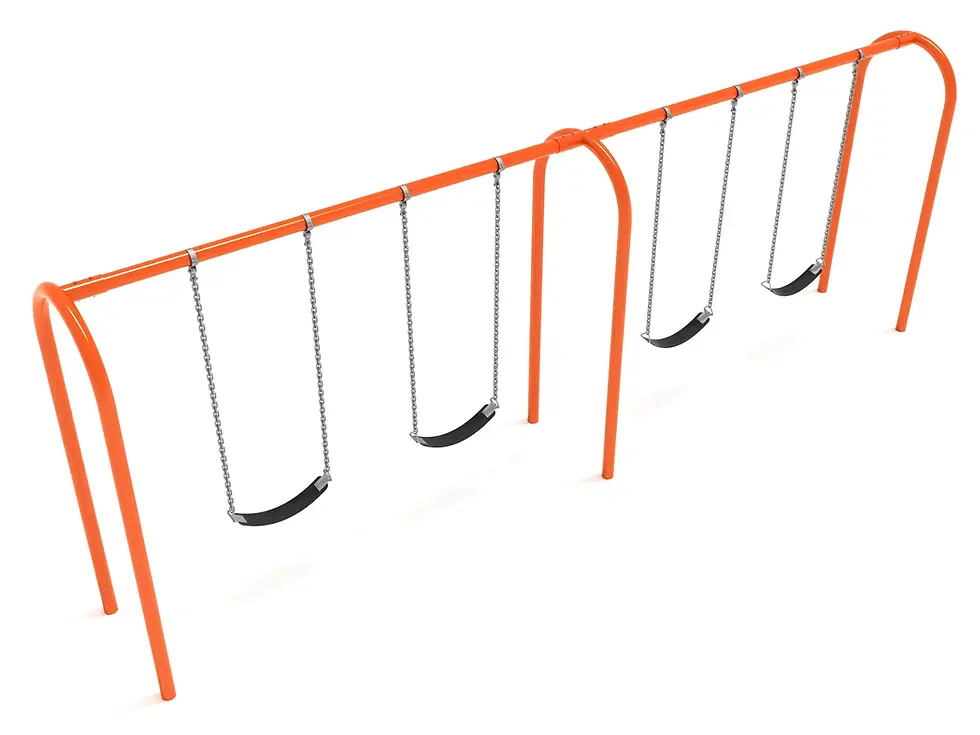
Playground swings are often viewed as simple recreational features, but in educational environments they function as powerful developmental tools. Well-designed, commercial-grade swing sets support structured and unstructured learning alike—contributing to physical growth, sensory regulation, social development, and even academic readiness. When schools thoughtfully incorporate swings into daily routines, they create opportunities for children to build essential life skills through movement and play.

Physical Development and Motor Skill Growth
Swinging is far more than passive motion. It requires coordination, strength, balance, and rhythm. Children must pump their legs, stabilize their core, grip chains or ropes, and maintain posture—all of which engage multiple muscle groups simultaneously.
Key Physical Benefits:
Develops gross motor skills such as balance, coordination, and controlled movement
Strengthens core, leg, and upper body muscles
Enhances proprioception (body awareness in space)
Builds endurance through repetitive motion
Improves bilateral coordination (using both sides of the body together)
For physical education programs, swings provide a developmentally appropriate way to build strength and coordination without structured drills. They allow children to move naturally while still achieving measurable physical outcomes.

Sensory Integration and Cognitive Support
The back-and-forth motion of a swing stimulates the vestibular system—the sensory system responsible for balance and spatial orientation. This stimulation supports regulation, attention, and spatial awareness.
For many children, especially those with sensory processing differences, rhythmic swinging offers predictable input that can help calm the nervous system and improve focus.
Cognitive and Sensory Benefits:
Strengthens vestibular system function
Improves spatial awareness and balance
Supports attention and classroom readiness
Enhances memory through improved regulation
Provides structured sensory input for children who need it
In educational settings, short movement breaks that include swinging can reset attention and increase learning efficiency. When children return to the classroom regulated and alert, instructional time becomes more productive.

Social Skills and Emotional Growth
The swing area is naturally social. Children take turns, negotiate space, assist peers with pushes, and engage in conversation while playing. These interactions foster critical social-emotional skills.
Social-Emotional Outcomes:
Encourages patience through turn-taking
Develops cooperation and peer interaction
Builds confidence through mastery of movement
Promotes emotional regulation through rhythmic motion
Creates moments of joy that strengthen school connection
The sensation of controlled flight—moving through the air under one’s own effort—often gives children a sense of accomplishment and independence. This contributes to positive self-esteem and emotional resilience.

Therapeutic Applications and Inclusive Play
Swings have long been incorporated into occupational therapy and sensory integration programs. Their predictable motion can reduce anxiety, help regulate overstimulation, and provide comfort for children experiencing stress.
Modern commercial swing systems can also include adaptive seats, high-backed support options, and accessible bays to ensure inclusive participation.
Therapeutic Advantages:
Calms the nervous system through rhythmic input
Supports children with sensory sensitivities
Provides inclusive play opportunities
Enhances self-regulation skills
Encourages participation across ability levels
When schools prioritize inclusive swing options, they communicate that every child belongs in the play environment.

Academic Readiness and Sleep Regulation
Physical activity increases circulation and oxygen flow to the brain, supporting executive function, concentration, and problem-solving. Swinging offers moderate physical exertion paired with calming sensory input—a combination that prepares students for learning.
Additionally, consistent physical activity supports healthier sleep cycles, which directly influence memory consolidation and academic performance.
Academic Connections:
Improves attention span
Supports working memory
Enhances classroom behavior
Contributes to better sleep quality
Promotes overall readiness to learn
Integrating structured outdoor movement periods that include swing use can strengthen the link between physical well-being and academic achievement.
Investing in Development Through Play
Commercial-grade swing sets are more than playground accessories—they are foundational developmental assets. From strengthening motor skills to supporting sensory regulation and building social competence, swings offer multidimensional benefits that align with educational goals.
For schools and educators seeking to create holistic learning environments, investing in high-quality swing systems is an investment in child development. When children move, regulate, connect, and thrive outdoors, those gains carry directly into the classroom and beyond.
Thoughtfully designed play spaces do not merely entertain—they equip students with the physical, cognitive, and emotional tools necessary for lifelong success.



Comments